

In spite of the fact that verges are the property of Cape Town City Council, all verges surrounding a property are the responsibility of homeowners to mow (if grassed), cultivate (if a garden) and maintain. It may seem an arduous task, but the overall effect of a neat, green or colourful verge far outweighs the time spent tending it.
If you wish to remove the grass and replace it with lower maintenance material, be aware that not everything is practical or safe to use. River stones, pebbles or chipstone are not ideal and pose a number of problems: e.g. potential security risk (they can be thrown at your car or house windows); they can roll into the gutter and into the storm drains causing blockage, or they can roll into the road causing obstruction. A few large, ‘accent’ rocks can be used to add visual stability and interest to the verge garden.
The ideal verge and garden plants are a variety of Cape endemic and indigenous water wise plants. These plants are naturally suited to our hot, dry Summers and cold, rainy Winters. Most importantly they attract birds, bees and insects.
Planning before purchasing
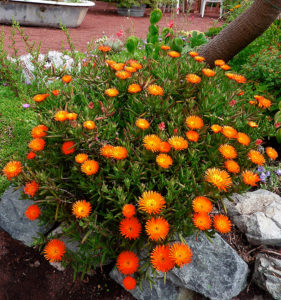
It is advisable to first do research into what types of plants and trees will suit your property and your needs. Remember that the Cape is a winter rainfall area, so choose plants that will thrive with winter rains and survive in hot summers.
Consider aspects such as:
- your plot size;
- the plant’s eventual mature size;
- the existing trees; as well as your neighbour’s trees hanging into your yard (as this affects your sun and shade areas);
- the suburb’s by-laws and regulations; they will affect your garden and house in some way or another.
Example: View your garden over the period of 24 hours and take note of where your sunny and shady areas are. (Ideally this should be done on the equinox and solstice dates.) Having this information will make choosing plants a lot easier.
Set yourself up for success, by choosing the right plants for the right spot from the start.
What plants to buy?
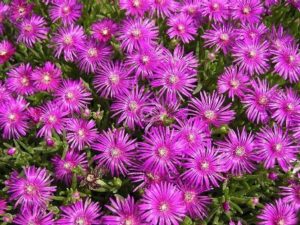
Endemic is better than indigenous; yet indigenous is better than exotic. Choosing plants and trees that occur naturally within a specific natural area is endemic and ideal. A useful website is the South African National Biodiversity Institute (or SANBI) site: https://www.sanbi.org/
Pinelands falls within the Cape Floral Kingdom and we have one of the World’s most diverse plant regions. We are truly fortunate and we need to encourage these plants in our gardens. [True, there are some much loved, hardy exotics that thrive in the Cape, but the decision is yours as to include them or not. You may recognise a few below.
In collaboration with the City of Cape Town’s Recreation and Parks department and the Friends of Pinelands Parks, below are some suggestions for verge and garden plants. The South African Biodiversity Institute link https://www.sanbi.org/resources/infobases has some useful information bases including biodiversity, invasive alien plants, and the red list of South African plants.
Here is a short list of suitable plant options for our Cape climate:
Groundcovers – Shade
- Asparagus densiflorus ‘Sprengeri (Emerald Fern)
- Chlorophytum comosum (Hen and Chicken)
- Crassula multicava (Fairy Crassula)
- Plectranthus ciliates (Speckled Spur-Flower)
- Plectranthus madagascariensis (Madagascar Spur-Flower)
- Plectranthus verticillatus (Money Plant)
Groundcovers – Sun
- Arctotis (African Daisy) (various)
- Bulbine frutescence (Snake Flower)
- Carpobrotus edulis (Sour Fig)
- Chaenostoma cordatum (Trailing Phlox)
- Delosperma (Klipvygie)
- Dimorphotheca jucunda (Trailing Mauve Daisy)
- Geranium incanum (Carpet Geranium)
- Lampranthus aureus (Vygie) (various)
- Mesembryantheum (Bokbaaivygie / Vygie)
- Plectranthus neochilus (Lobster Flower)
- Pelargonium reniforme (Kidney-leaved Pelargonium)
Shrubs
Aloes – a few examples:
- Aloe (larger, single stemmed varieties e.g. Barbarae; Ferox)
- Aloe aculeata (Red Hot Poker Aloe)
- Aloe lineata (No common name)
- Hybrids (e.g: Red Rooster, Jester)
- Aeonium abroneum (Tree Aeonium) (variety of)
- Delosperma (Klipvygie)
- Erica (Heath and Heather) (variety of)
- Euryops daisy (Resin Daisy) (variety of)
- Hibiscus (Rose Mallow) (variety of)
- Leonotis leonurus (Wild Dagga)
- Osteospermum (Cape Daisy)
- Leucadendrons (Proteas) (variety of)
- Leucospermum (Pin Cushion)
- Restionaceae (Restio) (variety of)
- Rhapiolepis (Indian Hawthorne)
- Salvia (Sage) (variety of)
Indigenous Bulbs
Agaphanthus sp – a few examples:
- Agapanthus africanus (Cape Agapanthus)
- Agapanthus praecox (Adelaide)
- Arctotis hirsuta (Namaqua Marigold)
- Tulbaghia violacea (Society Garlic)
- Tulbaghia violacea (Silver Lace)
Revised 2021